

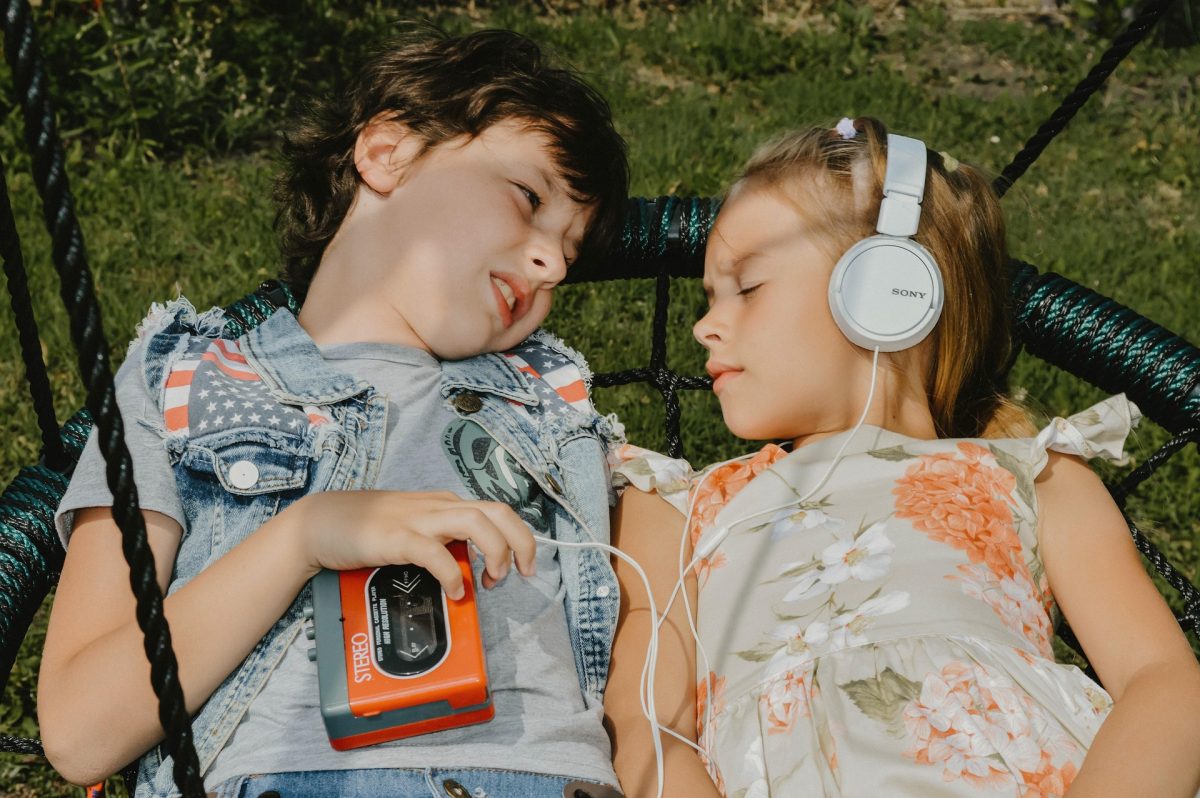
For many, music is more than just entertainment. It is something they turn to when they are stressed, overwhelmed, happy, or struggling with something personal. Whether it is listening to music in the car, going to or performing in a concert, or writing music as an outlet for everyday stress, music plays an important part in many people’s lives. People often think of music as a hobby or a simple form of entertainment like television; however, for a lot of people especially teenagers, it can have a significant impact on mental health. Music not only helps reduce stress, but it provides a healthy way to express emotions and creates opportunities for people to connect with others.
One of the biggest ways music affects mental health is by helping people manage stress. High school students, in particular, struggle with a lot of stress such as academics, extracurricular activities, jobs, and relationships. These responsibilities often cause students to feel mentally exhausted, ultimately leading to decreased motivation. Music offers a simple way to relax and take a break from those stresses.
Junior Isabella Seara explains, “Whenever I feel overwhelmed and panicky, rather than my thoughts crowding my head and making me more anxious, I’ll play music to hopefully keep my mind off whatever is stressing me out.”
Some people create the music themselves: “People have told me that I hum or sing to keep myself calm when I’m stressed,” says junior Vivian Lonczak.
Moreover, listening to music can slow heart rate, decrease stress, and create a sense of comfort during difficult moments. Many students listen to music while studying, exercising, or trying to fall asleep because it helps them feel more focused and relaxed. Many people find that listening to upbeat songs can have a positive effect because it boosts their mood and provides motivation during difficult moments.
Isabella Seara explains, “If I want to cheer up then I’ll play music to make me feel better.”
Music also gives people an outlet to express emotions that may be difficult to put into words. Everyone experiences feelings such as sadness, anxiety, anger, or loneliness, but not everyone feels comfortable talking about it. Sometimes a song can express exactly what a person is feeling when they cannot find the words themselves. Listening to lyrics that one relates to can help one feel understood and remind them that they are not alone.
Junior Liliana Saraiva expresses that, “It’s like an outlet that helps me just sit with my thoughts.”
Personally, I don’t like to open up about my personal issues because I feel like most of my friends cannot relate to the struggles I face. Therefore, music is what I turn to for comfort—the same is true for many.
Vivian Lonczak adds, “Music is a way for people to express themselves, whether they make it, listen to it, or bond with people over it, and I think that’s why music is beneficial for mental health.”
In addition, creating music can be even more beneficial. Writing lyrics, composing songs, or playing an instrument allows one to convey their emotions into something personal and meaningful. From my personal experience, playing an instrument has always been an outlet when I am struggling. It not only provides a distraction, but it allows me to be surrounded by people that I trust. This is one reason why music therapy has become a popular solution that many therapists recommend. Through music, people can process emotions in a healthy and comforting way.
Another important benefit of music is its ability to bring people together. People naturally seek connection, and music often creates opportunities for friendships and unity. School bands, choirs, orchestras, and dance studios allow students to meet others who share similar interests and passions. Working together toward a performance or competition helps build teamwork and trust while creating a sense of belonging.
Isabella Seara explains, “If I want to cheer up then I’ll play music to make me feel better.”
She also comments, “I also love listening to music while painting as inspiration and a way to calm me down. I truly couldn’t imagine my life without music.”
Outside of school, concerts and music festivals bring together people from different backgrounds who connect through a shared appreciation for music. These relationships can have a positive impact on mental health because strong social connections help reduce feelings of depression and isolation.
Music is also highly influential when looking at people’s actions, hobbies, and interests.
Vivian notes that “Art, fashion, and makeup are some of my hobbies as well, and they are influenced by the type of music I listen to. I’d say that music is integrated into most, if not every part of my life.”
In addition to improving emotional health, music can also improve focus, motivation, and self-confidence.
Liliana Saraiva explains, “Music affects me on a daily basis by making me feel ready to conquer the day.”
Many students find that listening to certain types of music helps them concentrate while completing assignments or studying for tests. In addition, athletes often use music before games or workouts because it increases energy and motivation. I have personally found this to be true as I often listen to music before tennis matches and while doing homework.
Learning an instrument can also build confidence because it requires dedication, patience, and practice. I have been playing alto saxophone since fourth grade and I have found that it has always encouraged me and pushed me to be better. I have found that mastering a difficult piece of music or performing in front of an audience gives me a sense of accomplishment. These experiences can not only strengthen self-esteem, but they also encourage people to strive for their best.
Although music has many beneficial aspects, it is important to recognize that it can sometimes have negative impacts as well. Music that constantly focuses on hopelessness, anger, or sadness may make negative emotions worse. For example, repeatedly listening to extremely sad music while already feeling depressed can sometimes make it harder to move past the struggles one is facing.
The effect of music often depends on the person and the situation. A song that helps one person cope may affect someone else differently. Therefore, it is important for people to pay attention to how certain music influences their mood and choose music that supports their mental well-being rather than hurting it.
The connection between music and mental health has become even more noticeable in recent years. During the COVID-19 pandemic, many people turned to music as a source of comfort while dealing with stress, uncertainty, and isolation. Music helped people stay connected with friends, family, and peers when being in-person was not possible.
Throughout the years, music has become more and more popular. Music is constantly surrounding us in our daily lives. Whether it’s listening to music while driving, while doing work, or having fun at a party, music is constantly around us which has led to people becoming more dependent on it.
Liliana explains, “I think that people rely more on music than previous generations because music grows with us as time goes on. People listen to music on the daily and use it to get away from things that are happening in the real world.”
Lastly, music holds memories. While one may not realize it in the moment, certain songs can remind you of a specific moment or emotion. Music can easily remind people of a memory or emotion, which clearly exemplifies the impact it has on everyone.
Vivian explains, “I hear older generations talking fondly about their favorite music and the memories it holds all the time.”
Overall, music has a powerful impact on mental health. It helps people cope with stress, express emotions, connect with others, and build confidence. While it is not a solution to every challenge, music is one of the most accessible and effective tools for supporting emotional well-being. In a world where mental health is becoming an increasingly important topic, music continues to provide comfort, understanding, and a sense of connection for people all over the world.