

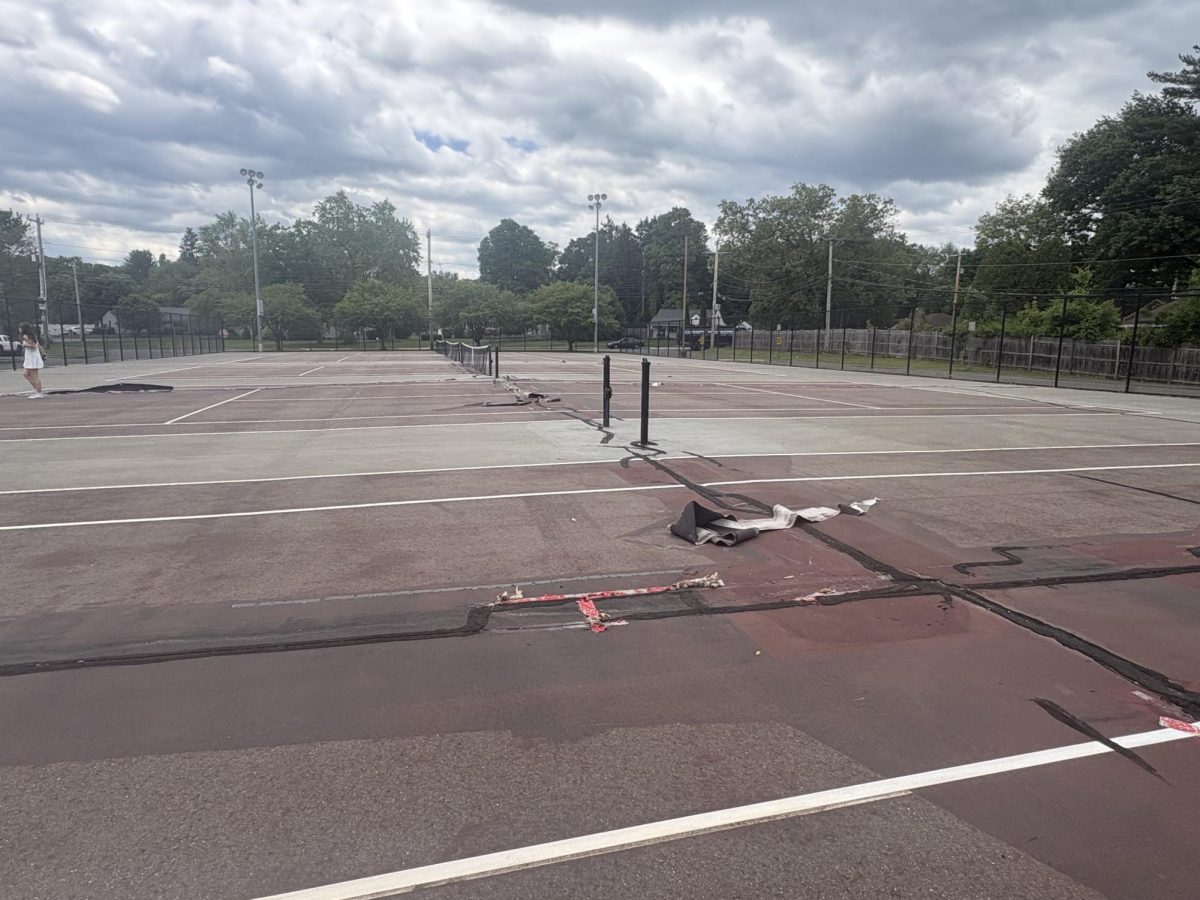
For a school that prides itself on athletics, our tennis courts tell a different story. Cracked surfaces, ripped up nets, and strips of tape covering damaged areas reveal the ultimate neglect that has taken place for years. But, as their condition continues to worsen, the question still stands: how did the courts get this bad in the first place?
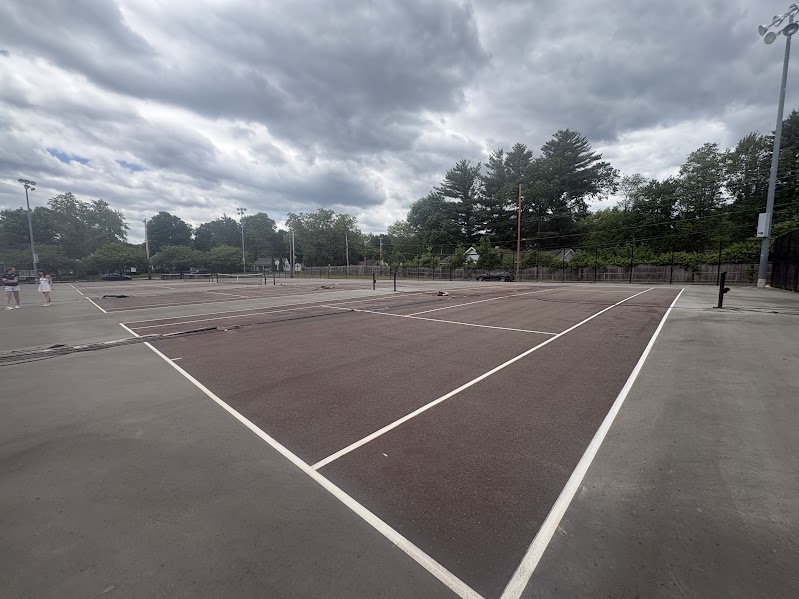 In an attempt to find answers, I personally interviewed our own athletic director, Mr. Brillo. While some may assume the damage comes from years of heavy use, the real culprit is something much harder to control: the weather.
According to Mr. Brillo, the courts have suffered from a cycle of damage caused by water infiltration and harsh winter conditions:
“Because of the cracks, water will get underneath, and you end up with what they call heaves, which then expands the cracks,” he explained.
This process repeats itself year after year. Water seeps into even the smallest openings in the surface during warmer months. When temperatures drop in the winter, that water freezes and expands. As the ice pushes against the pavement, it widens existing cracks and creates new areas of damage.
Over time, what begins as a small imperfection can grow into a major structural problem. Each season leaves the courts in worse condition than before, making repairs increasingly difficult and expensive.
Although the deterioration may seem sudden to current students, efforts were made years ago to extend the life of the facility. Around a decade ago, the school invested in renovations designed to improve the courts and restore their appearance.
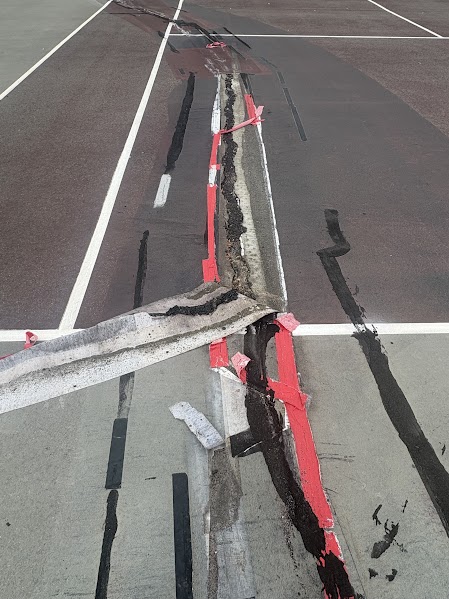 “What we did was kind of like a Band-Aid,” Mr. Brillo said. “We fixed the cracks, made them look nice, and had them repainted and resurfaced.”
For a while, those improvements worked. According to Brillo, the repairs held up for approximately five years before the underlying issues began to reappear. As new cracks formed and old ones expanded, the courts slowly returned to the condition students see today. Eventually, the damage became severe enough that temporary fixes were no longer effective.
The consequences have become impossible to ignore. During the past two years, the last two courts have been considered completely unplayable. This season, the situation worsened to the point that the school’s varsity tennis teams were unable to host any home matches.
Losing the ability to play on home courts can affect more than just scheduling. Having well-maintained home facilities are an integral part of any athletic program; they provide athletes with a familiar environment where they can represent their school. Without playable courts, players are forced to travel more often and lose the advantage of competing in a setting they know well.
For student-athletes, the impact extends beyond logistics. The condition of athletic facilities can influence morale, motivation, and overall pride in a program. When athletes see other schools maintaining modern, well-kept facilities while their own courts continue to deteriorate, it can be discouraging.
Beatrice Chelo, a member of the varsity girls tennis team, described the frustration many players feel:
“It’s kind of depressing going to other teams and then coming back home and seeing our courts in terrible condition,” she said.
Colin McClintock, a member of the varsity boys tennis team, shared similar feelings:
“You go to another team and they have good courts, and it’s a different feeling because ours are so messed up.”
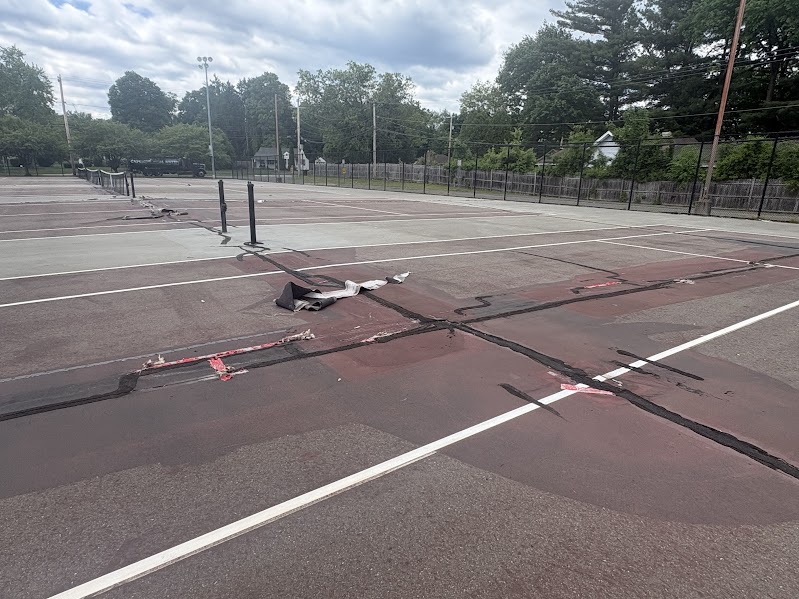 Their comments reflect a broader sentiment among athletes. Sports programs often serve as a source of community pride and school spirit. Facilities, for most athletes, symbol the value a school places on its students and extracurriculars. When those facilities become neglected, students can feel that their sport is overlooked as well.
The condition of the courts also raises concerns about fairness and opportunity. Home courts are meant to provide a consistent training environment where athletes can develop their skills. When those courts are unavailable or in poor condition, players lose valuable practice time or are forced to adapt to less-than-ideal circumstances. For competitive programs, those small disadvantages can add up over the course of a season.
Despite the current situation, there is some reason for optimism. According to Mr. Brillo, he plans to address the problems that are beginning to take shape. After preliminary discussions and estimates with the town, officials are targeting 2028 as a potential timeline for major renovations.
While that date offers hope for the future, it also highlights the complexity and cost of the project. Repairing the courts is not as simple as filling cracks and repainting surfaces. A temporary renovation project is expected to cost approximately $600,000, a significant investment for the school and community.
Even with that level of funding, the proposed work would not completely eliminate the problem.
“We would strip them down and rework the drainage,” Brillo explained. “It would probably be good for around ten years or so, but you’re gonna end up with that same cracking again at some point.”
His comments reveal a difficult reality. Although drainage improvements and resurfacing would dramatically improve conditions and extend the lifespan of the courts, no renovation can permanently stop the effects of weather. In regions where freeze-thaw cycles occur every winter, maintenance remains an ongoing challenge.
The goal is not to create courts that last forever, but to build facilities that can withstand environmental conditions for as long as possible.
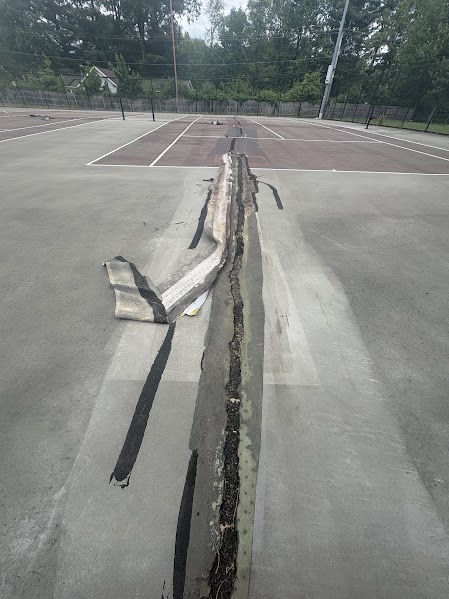 Still, for many students, the focus is less on long-term limitations and more on the present condition of the facility. The courts, as they currently stand, are already limiting participation and affecting the experience of athletes who rely on them every day. What is meant to be a space for training, competition, and school pride has instead become a reminder of delayed maintenance and aging infrastructure.
The story of the tennis courts is ultimately about more than cracked pavement and damaged nets. It is about the importance of investing in facilities that support student-athletes and strengthen school communities. While weather may be responsible for much of the physical damage, the future of the courts depends on the decisions made by school and town leaders in the years ahead.
For now, students can only hope that the planned renovations become a reality. Until then, the courts remain a visible reminder that even successful athletic programs require constant care and investment. Whether the expected repairs arrive in 2028 or later, one thing is clear: the tennis courts have reached a point where action can no longer be postponed.