

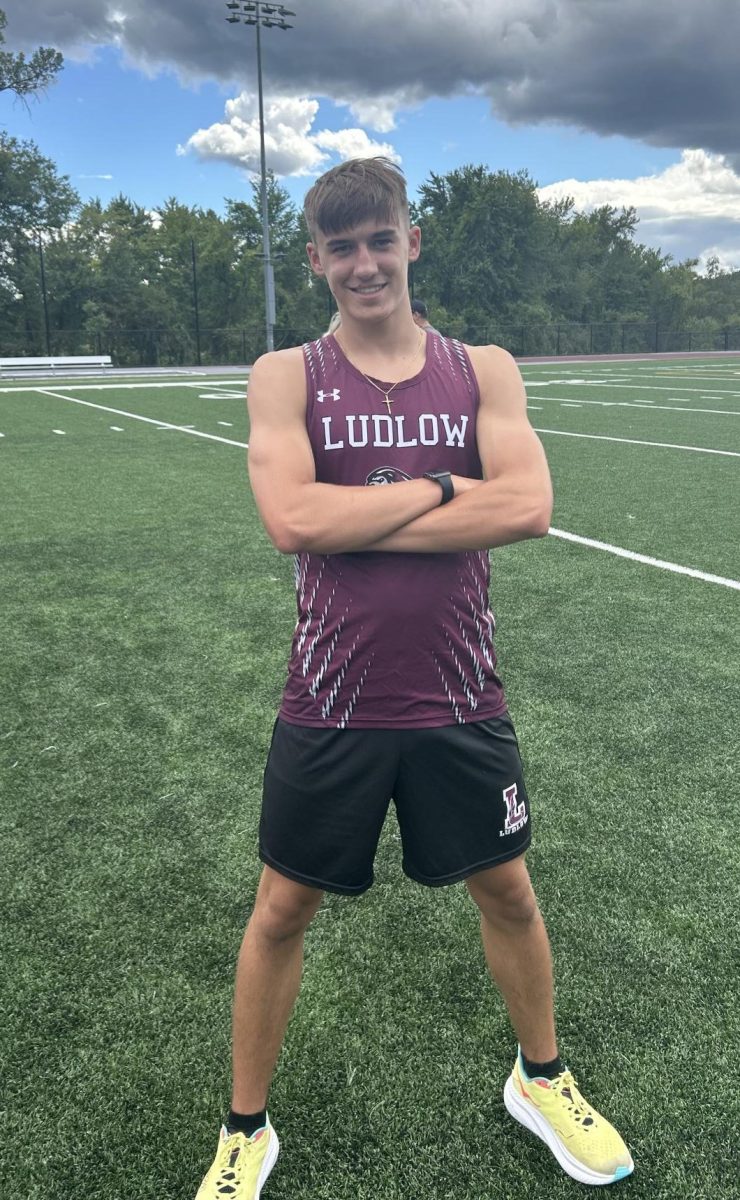
“I’ve known him since we were in 3rd grade. The first memory I’ve had with him was when we used to have those “houses” in elementary school for when we would go to other classes and meet up. He was my partner for one of the activities and taught me how to play Go Fish. Honestly, I would marry Tyler if I could. Perfect dude.” – Arda Turan, Junior
A similar sentiment made by Turan can be found within a majority of the student body regarding Tatro: he practically excretes kindness at any given chance. Even with unanimous support, would that make him a “man of tomorrow” through his popularity? His attitude? Or simply just the choices he made leading up to today?
He’s just Tyler. Though by being “Tyler,” he makes himself out to be Ludlow’s man of tomorrow: the ideal model student to follow in suit.
Outside of this “ideal” realm, Tatro is still an everyday student like ourselves—filled with passions and aspirations:
“I really need to get into it more, but I’m really passionate about views, like hiking. All these landscapes I like [to go], you’re not supposed to, at Cislak. I love it there. But also what I’m really passionate about is my family. They keep me going and I love how they’re there for me. I’m there for them.”
And of course, as any athlete-orientated student would, considered his sports career at LHS when declaring one of his many hopes being the reward of “a good PR.” Tatro had also given a light-hearted addition:
“Like finding out who I really am—I feel like I need to get out there more.”
ACADEMICS
Outside of extracurricular activities, a student’s main focus is their academics. This traditional belief continues through Tatro. First-time AP student with a remarkable (weighted) GPA of 4.107:
“Definitely take [APs] seriously. It sets you up for college, so think about that when you take these classes. Make sure you study a lot. Definitely study.”
With the mention of his advanced-placement courses, Tatro remarked the struggles that came with a specific class in mind:
“I really liked AP Chem but sometimes those tests were struggles, and I overcame them by studying during the week—it was hard, but I loved it so much.”
It’s simple to disregard AP classes as another instance of “additional, though not necessary” when it comes to college applications. They’re, for the most part, the garnishing of a dish that doesn’t need it in the first place to be complete.
Though, as of late, SAT scores are becoming more and more necessary “garnishes” for applications. Gradually of course, but the rise in required test scores have still turned the heads of many students alike.
Tatro had been one of the students to take the May SAT test, giving his own grimaces over the exam after declining the opportunity to share his score:
“I thought it went pretty well, but clearly I don’t know how to put a linear regression on my calculator. But, overall, I think I did pretty well, [but] I think I was too confident about it.”
Despite the tone, he would later reveal that he hadn’t actually received easier secondary modules as did many low-scored students, but instead more challenging ones.
Tatro detailed his consistent strategy of not only maintaining his academic focus but also his many responsibilities garnered up to now:
“I like to ride with the waves, but I do get stuff set ahead of time. If something gets in the way of something, I find a way around it. But, usually I like going with the flow. Not the best idea, but I’m more organized and set certain times and dates for where I need to be.”
ATHLETICS*
Alongside academics being a student’s main focus, athletics come to share a similar importance for many students as well. Tatro, in total, has played four sports for the school: cross country, basketball, volleyball, and track.
Just as he seems to be flourishing within the athletic-realm, he pointed out a fellow student athlete within his life that pushed him forward in regards to his sport-related capabilities:
“Logan Walsh, he’s my neighbor as some of you may know—but I feel like he pushed me to my limits. He always does, and is still doing it [now]. I’m going to be training with him over the summer. He says: ‘push yourself,’ ‘you got to be better than everyone else,’ and I’m like: ‘alright, alright.’ I try my best, he just pushes me.”
Fall: Cross Country, Freshman – Ongoing
Freshman: 5 Team Wins, Team Places 1st in (Assumed) Multi-Town Competition
Sophomore: Team Places 1st in (Assumed) Multi-Town Competition
Junior: 1-1
*Overall, this, and many other sports about to be mentioned lacked most game results, or just scores completely missing entirely on the high school’s athletics page. Keep this detail in mind when coming across “odd” win versus loss tallies.
Tatro shared a brief, though fairly predictable view of the sport:
“It’s a really tough sport, surprisingly. I want to say our team gets along well, I feel like we’re more like a family.”
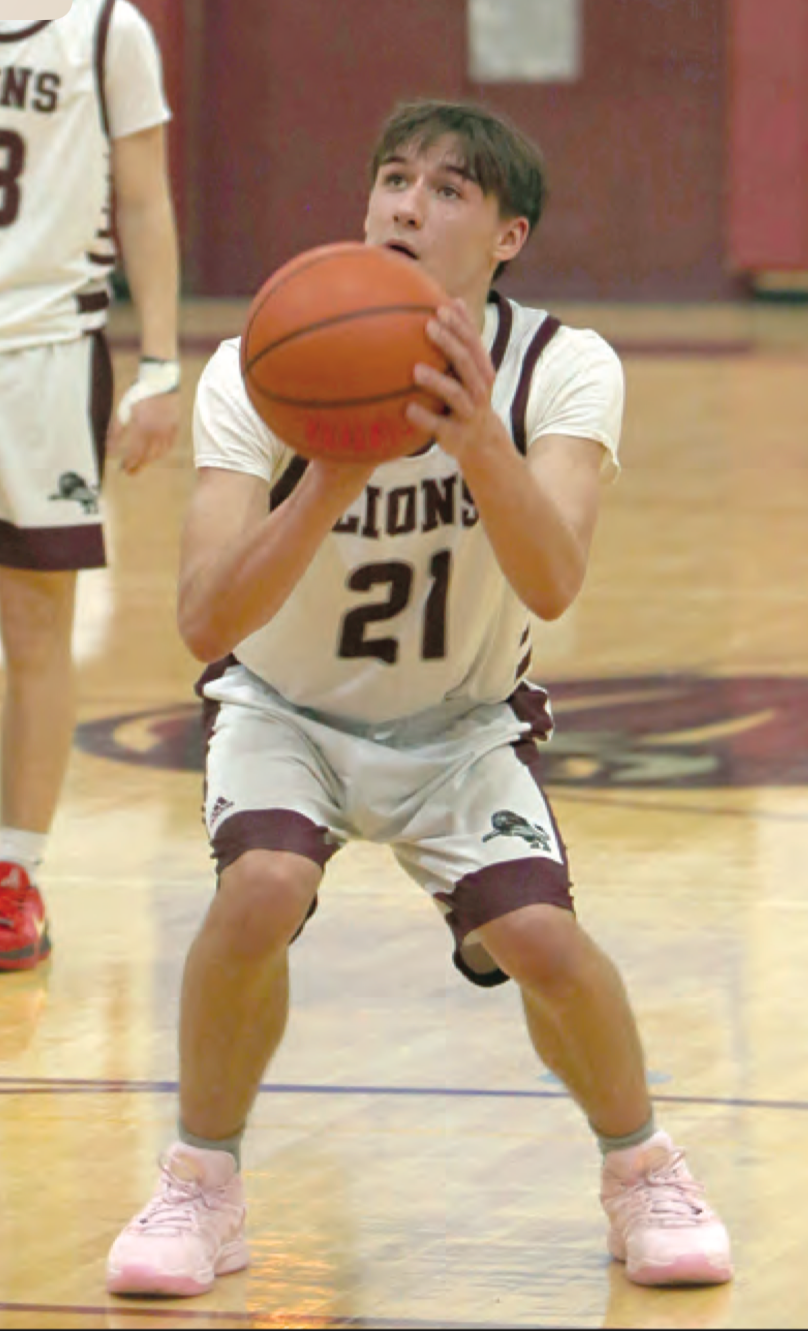 Winter: Basketball, Freshman – Ongoing
Freshman (JV): 6-6
Sophomore (Varsity): 9-9
Junior (Varsity): 6-7
Besides being a completely different seasonal sport, Tatro referred to the stark differences between the fall and winter sport:
“It’s more intense and different than cross country. More mentally draining, but I still love it as a sport.”
It’s obvious to all that regardless of the challenges, he’s able to find the positives within any given opportunity. With that being said, Tatro makes the first mention to events, though related to the sport, not directly tied to a game but rather the team itself:
“I love team dinners.”
Spring: Volleyball, Freshman
Freshman (Varsity): 11-7
The only sport that was dropped post-freshman-year, though Tatro would later on specify that it was only dropped due to a spark in interest for the current spring sport he participates in as of now. It doesn’t hurt to note the somewhat insane fact that not only being a part of the varsity team during one’s freshman year—but to also drop it the following year anyway.
Spring: Track, Sophomore – Ongoing
Sophomore: No Recorded Scores
Junior: 1 Team Win
As the replacement spring-season sport, track seemed to be a far more interesting subject for Tatro when questioned:
“I did volleyball my freshman year, which was really fun as well, but not since sophomore year into junior year. I’ve been doing track, which I love even more surprisingly with all the new kids, team aspects, new PRs, and running.”
Each day piles upon one another, counting on and on until each of his inevitable senior nights. Many students tend to luck out with only two senior nights—possibly even one if they’re the more lax-type of athlete. Even so, with Tatro having the chance of having three senior nights in total, he still seemed mixed between emotions from the mention:
“I’m excited and sad because I don’t want it to be my last high school home game. It’s just very sad, but I’m excited also because we’re almost graduating. We’re almost done. A new era is coming—I’m excited.”
COMMUNITY
Practically within sporadic means, Tatro has managed to garner any opportunity he can get in relation to leadership-focused roles. The most memorable instance: five-year class presidency.
Beginning in the eighth grade, where students are presented the opportunity to vote in a democratic-like style and elect a prominent figure in their grade, Tatro has been elected every single time. As our standing president, he’s granted the responsibility that keeps the class afloat and makes note of this:
“Being class president is a gift. I love being there every year. It’s one of my favorite things. I don’t consider it a job, [it’s] a new opportunity for me. I just love representing everybody. It makes me happy that everyone’s fine with it and accepts me: that’s my favorite.”
Of course, it’s not solely the president that handles the entire class—their advisors, secretary, treasury, and vice president come to assist as well.
“I’ve worked with Tyler since eighth grade. He’s been president since eighth grade and I was secretary—now I’m vice president all throughout high school. He cares very deeply about our class, he’s always the first one reaching out to our advisors, texting the groupchat, planning fundraisers—he’s the first one to do that. He’s very passionate and he’s very easy to work with. During the pep rallies, he’s always the one screaming, trying to sign up for things, promoting spirit weeks, he’s always the first one to jump up and do that. He’s very outgoing—I’m very lucky to have been able to work with him.” – Natalina Castro, Junior Vice President
Outside of many re-elections within the class council of ’27, Tatro had recently been elected as the school’s representation of the National Honors Society student council president.
“I’ve got a lot of ideas, I’m excited.”
And as would any good (NHS) president do, Tatro was able to define what the organization actually does outside of acting as a supposed “boost” for college applications:
“They work with the community, what they do is similar to Project 351: get non-perishable stuff like food and or talking to retired military people. It’s to give back to the community, and its purpose is to help our community by supporting its growth”
A slight detail that hadn’t been mentioned, was the volunteer requirement. It’s not as complex, it’s quite literally keeping up with consistent volunteer hours. And although Tatro hadn’t explicitly referred to it, he listed off the many volunteer opportunities he takes up for his requirement hours:
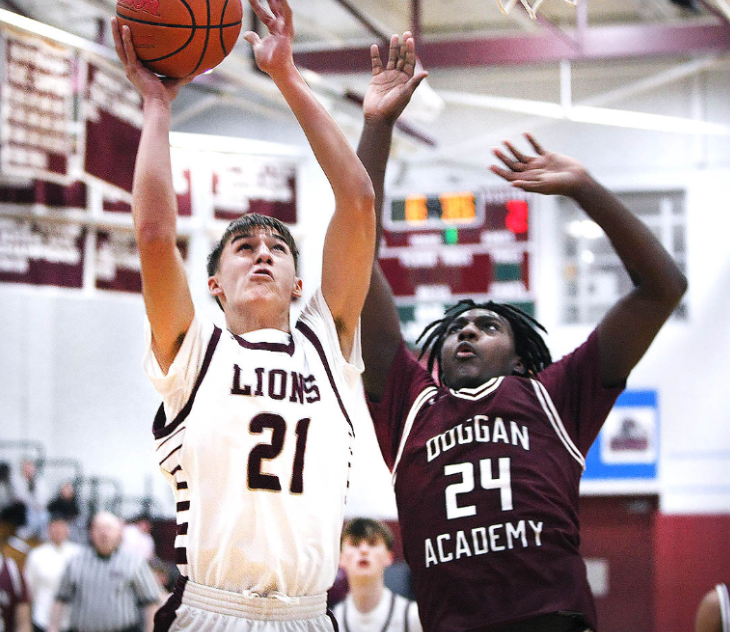 “Definitely sports. Like last year, I might do it again this year, I was a coach for a basketball team. I really liked that, it was fun seeing the little kids trying to shoot a ball. Definitely related to sports, or maybe clean-ups, I do a lot of clean-ups if someone’s asking.”
Though outside of his required hours for the organization, Tatro seems to just volunteer in sports-related opportunities to simply volunteer and help others. SALT, another leadership program, was referred to while mentioning the volunteer-related relationship with the Athletics Director, Tim Brillo:
“He knows me—I do this program called SALT: it’s a leadership program through sports. He knows me through that and he trusted and asked me. And of course, I said yes. I’m not going to turn down a referee job—that sounds fun. But yeah, I knew him years before before getting into high school.”
By “referee job,” Tatro was referring to the teachers versus tricksters basketball game that had occurred early fall—where he was refereeing. The SALTS program also includes the tailgate events that LHS hosts for every sports season.
Similar to the coaching gig for younger basketball players, Tatro mentioned another basketball program he takes part in each summer:
“I do [another] basketball program. It’s a week long for three to four hours everyday: just teaching grades freshmen year to kindergarten on how to play basketball. Certain drills and layups, but it’s fun to be a counselor and it’s so different but it’s so fun because it gets competitive alot.”
“Community” work doesn’t always have to come without pay, especially since most jobs that teenagers take up tend to affect the community. Cashiers, waiters, or simply labor work requested by neighbors—the community is affected.
Though, “self-made” businesses past elementary school aren’t as popular as lemonade-stand children hope—Tatro himself is able to sufficiently hold up his own: it’s a mowing/landscaping business.
“I like it much better. I’ve never had an official job. But, no offense, I feel like I make more when I work on my own schedule. I work like three to four times a week for maybe three hours each. I get paid above minimum wage and I can schedule whenever I want to work.”
Though, one could deem being an active member of your family just as similar to being an active worker. Tatro recited the similarities between his father and himself:
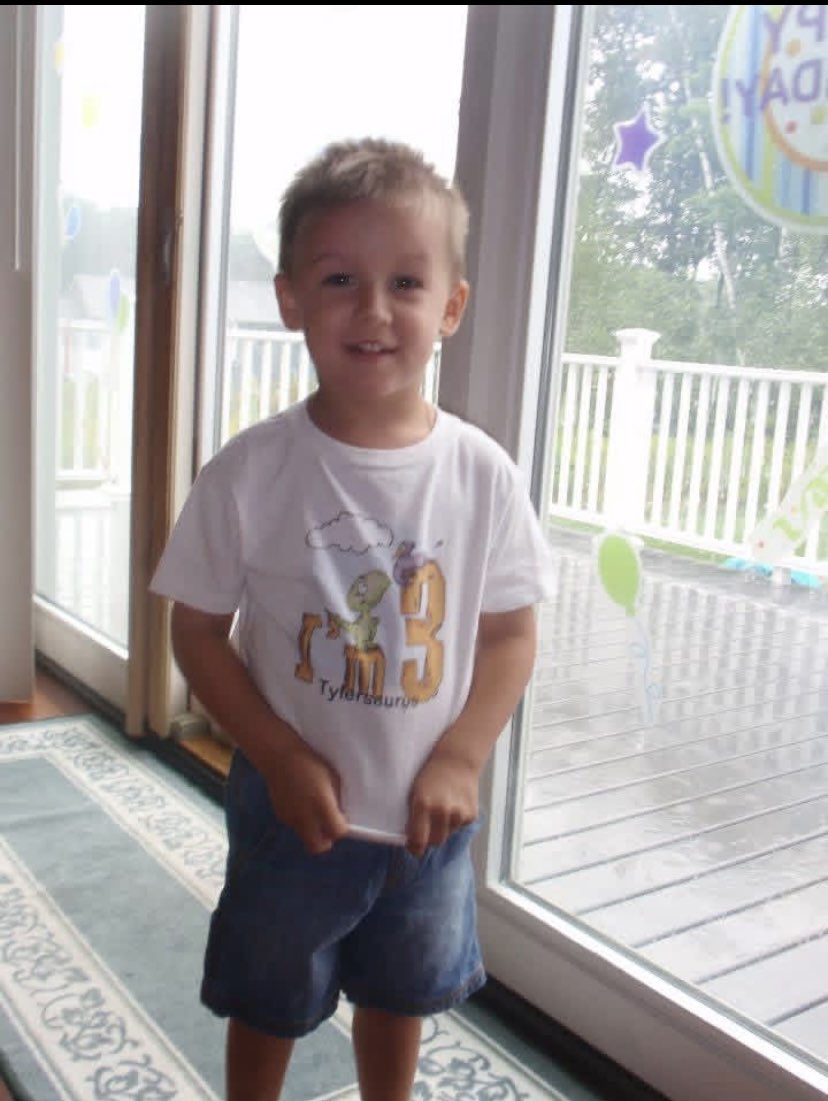 “He says he knew everybody and there’s not one person that didn’t know him. He talked so much, played sports in high school football—him and I are pretty similar.”
Of course with similarities: differences come right behind:
“He says he got into a lot of fights defending his friends. Definitely a fighter, I’m not…”
I would digress however, as a brief memory of him fighting another guy comes to mind—nonetheless. Tatro, obviously not simply a shadow of his father, but instead another equally important piece within his family. He mentioned a favored tradition his family hosts:
“There’s this thing I do with my family and my extended family: a “siblings day.” It’s one day a month, we go out to eat and hang out.”
Leadership roles, jobs, family—but what about friends? Loved ones, in a non-family sense, build up one’s community just as much. When asked, “How would your friends describe you,” Tatro answered simply:
“Energetic, loud, and probably very enthusiastic…”
Following suit, said friends answered predictably:
 “Tall, athletic, handsome, caring…and you know honestly, I would call him the perfect candidate for president. I wouldn’t want anyone else leading us nor representing us. He’s a very good kid, I love him. I don’t know what I would do without him this year. With him in my classes, it’s been more fun. I love Tyler.” – Arda Turan, Junior
“Funny, an athlete, watches anime, and he plays Minecraft a lot. I like anime too. He’s one of my closest friends though, I love him. He’s a really good class president too” – Alp Turk, Junior
“I think Tyler is a really nice individual. He’s always there when you need him. Anything you ask, he’ll do it for you, no charge.” – Marcus Goncalves, Junior
FUTURE
Similar to senior nights—the inevitable future comes abruptly. It comes pestering at those who least anticipate it, resulting in either necessary or unneeded change. Simply put: no one is truly ready for the future.
It doesn’t mean it isn’t fun to predict what some may think could happen, just as Tatro does when pondering on his potential life ten years into the future:
 “Not trying to brag or anything, but I feel like I’ll be very successful in what I do. I feel like I’m a hard worker and push myself to whatever it takes. Like, I’ll be starting to develop how I want to live in the future, eat everyday, and work. By then, I’ll probably graduate from college—not a doctorate but a masters. I’ll look into travel for the future, that’s a big one. I want to travel so much.”
Though, taking a couple steps (or years) back, many junior students ponder complex questions: what college did they want to attend? What major did they want to take? Tatro seemed to have little to no struggle in answering these questions, starting with a fairly recognizable school:
“I really am interested in UMass. I got a lot of friends there, and [UMass] has one of the best business schools ‘round, it’s the Isenberg school.”
And not only are juniors asked for what school they want to attend, but if they have any alternative colleges in the back of their mind. He had a fair amount of backups as well:
“That is maybe my one, but Bentley is my second. It’s pretty expensive, but it’s known for business—they’re literally a business university. I think they’re the top in either our region or our nation for business. UConn is another one, maybe an alternative, nice campus but it’s in the middle of nowhere.”
Only specifying his major after mentioning his desired career, Tatro listed off a somewhat common major choice:
“I really want to major in business, maybe part business-management or finance. I want to be a CEO in the future, or at least a part time owner. So, if I have those degrees and have a business management degree, I can set a path to that harder job.”
Students of course aren’t meant to dwell on goals simply regarding future careers and continued education—they’re anticipated to dream and hope for far more than that. Dreams that envision a future that holds many cherishable moments.
Tatro spoke upon one of his many, though very unexpected, hopes:
“I want a house in Switzerland…that’s what I want. I’ve always loved that place, but I just really want to travel in the future. I want to non-stop work work work and travel whenever I can. Definitely with a partner. [Kids] definitely in the future, probably at thirty five…”
It’s at this moment that he simply took the moment to babble on about this dream, a refreshing change from the generic “smart and athletic leader” archetype:
“I’ve always admired Switzerland: the mountains, the greenery…it’s so nice. I’ve never visited and I really want to go there, you don’t even understand. They got everything there, even though they live in villages—they got it going on. They know what’s up. It’s beautiful.”
 Tatro pointed out a familiar sentiment that had surely been heard time and time again for all Ludlow students alike, entering or already attending the high school:
“Enjoy it while it lasts. I feel like these four years have been flying by. It’s a good thing to remember high school, I love it.”
To ask one last time—what makes an individual a “man of tomorrow?”
It can be a variety of things, or simply one thing alone. Role models aren’t constructed within a factory of some sort, all that a “man of tomorrow” simply needs is true heart. A true enough heart that it beats for what’s right for the reasoning that it’s right, rather than for some type of gain.