

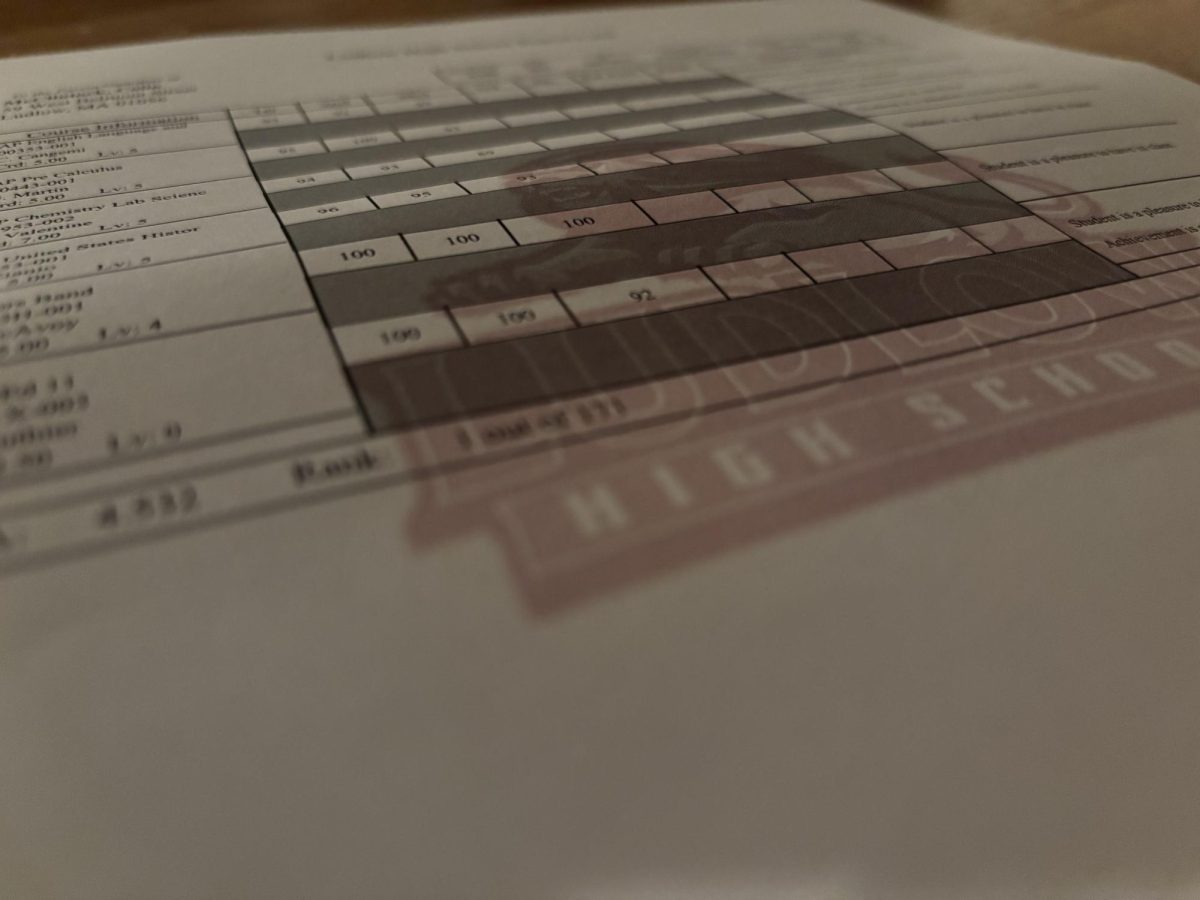
With the school year coming to a rapid close, it is time for the thing that most students dread at the end of the year: report cards. Whether it’s seeing if your B+ in math got bumped up to an A, or wondering how much that final essay affected your grade, many students find themselves waiting with bated breath to get their report cards. But why?
Statistically, students are more likely to receive good grades now than ever before. And that is the result of a phenomenon that has been developing for decades, called grade inflation. Many now are discussing whether our grades truly reflect the work that earned them.
History
The grading system as we know it has not been around forever. Up until around the turn of the twentieth century, schools and universities used a variety of different methods to judge students’ performance. Excellence could be marked by anything from an Optimi to a 100. That all changed, however, in the late nineteenth century, just 8.8 miles away.
South Hadley’s Mount Holyoke College pioneered the first version of the A-D/F system, the one that we know and don’t always love today. Introduced in 1897, they became the first college to ever record a system like this. It later became more widely adopted in the early 1900s in order to prepare a standardized workforce.
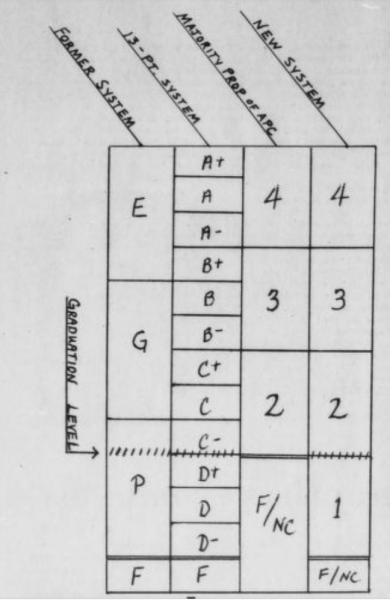
MHC’s new scale was one of several that were tested by the school. Based on these previous metrics, we can see that A’s originally meant excellent, B’s and C’s meant good, and D’s and F’s meant poor. But do those standards hold true today? Well, it depends on who you ask. LHS Junior Natalina Castro, an outstanding student on track to complete 10 AP courses in high school, was asked to what extent she thought those standards remained true,
“I think it just depends on the type of student you are,” said Castro. “But if you’re an average student, A’s are excellent and B’s and C’s are average.”
Despite this sentiment, statistical trends show otherwise. From 1998 to 2016, the average high school GPA increased from a 3.27 to a 3.38. Around half of graduating students boasted an A average in 2016. Many believe that this does not demonstrate an increase in academic proficiency; rather, it shows an underlying trend that has gone largely unnoticed, one that suggests A’s are closer to average than we previously thought.
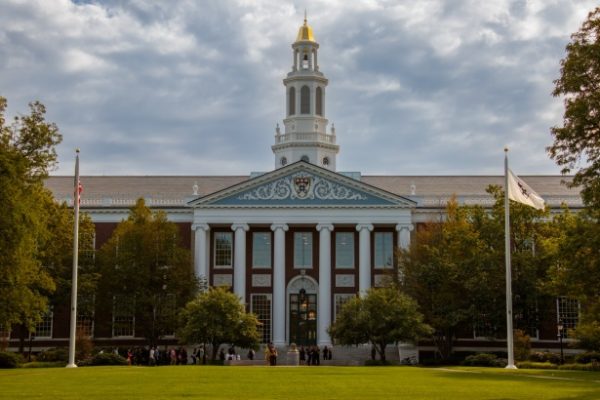
Grade inflation, the term used to describe this change, is not just seen in high school. Its signs can be found even at the highest academic levels. Harvard has recently seen a spike of up to 66% of its students getting A’s. The Harvard Crimson, the famous undergraduate student school newspaper, reported that since 2015, the percentage of A’s on campus has risen by over 20%.
Policy
To combat this rise in grades, schools all over the country are introducing new rules to curb this inflation. Most notably, Harvard recently passed its “20%+4” policy, which will take effect during the fall 2027 semester. The name is self explanatory — going forward, only roughly 20% of students per class will be able to receive A’s. In a class of 100 students, only 24 could get the highest grade. The goal of the policy is not just to lower grades, but to maintain Harvard’s competitive culture.
“It will, I believe, strengthen the academic culture of Harvard,” said Amanda Claybaugh, Dean of Undergraduate Admissions, “it will also, I hope, encourage other institutions to confront similar questions with the same level of rigor and courage.”
This positive outlook on the policy was not shared by members of the LHS community, however.
When asked about the Harvard rule, Mrs. Connelly replied, “I think students should be awarded the grades they earn. Grades should be a direct reflection of effort and what the student puts forth.”
The new approach was described as “dumb and unfair” by Junior Liliana Sariva. “I think that teachers should be allowed to give whatever grade they want…”
When asked, LHS Alum and current Harvard attendee Jack Favata preferred not to comment on the topic.
 Sides of the Argument
It is easy to see that there is major disagreement about grade inflation, and there are pros and cons to it.
On one hand, the trend has some very negative and potentially far-reaching implications. It could demonstrate lax academic standards. Despite the rising of GPAs and class averages, MCAS scores reveal that both Ludlow High School and the state of Massachusetts have consistently scored below “meeting expectations” in the Math, Science, and English tests. With over 80% of colleges in the U.S. being test-optional, these high grades may prove deceptive to admissions officers.
Inflated scores also devalue the hard work of certain students. Imagine a scenario in which two students completed an assignment, one putting in the bare minimum effort to get a perfect score and the other going above and beyond, and got the same grade. Firstly, this diminishes the efforts of the latter student. Second, it demotivates that student from trying hard while simultaneously rewarding a lack of effort from the other student.
On the flip side though, many argue that grade inflation has little effect, and that it can actually be beneficial. For one, it promotes collaboration between peers. Without Harvard-like limitations on marks, students are encouraged to study together and share educational resources. Many have also suggested that grades simply may be increasing due to hard work from students
“If more people are just getting better grades, then they deserve the better grades,” said Castro.
This topic is quite a difficult one to judge. It has very clear upsides and downsides. Evidence is sparse, and it is challenging to clearly determine either causes or coincidences. It is extremely important to ensure the validity of our grading system, however. Transcripts should be an honest representation of scholastic achievement, and it is our responsibility to keep them as such.
The discussion of grade inflation ultimately comes down to one thing: trust. Colleges must be able to trust the integrity of their applicants’ marks. Students must be able to trust that their work will be fairly evaluated. Schools now face the difficult challenge of guaranteeing that this academic trust can go both ways.
So now, my fellow students, when the time comes to check out your final report card, I want you to stop for a moment and ask yourself; what do these grades really mean?
james • Jun 4, 2026 at 9:35 pm
Wonderful and important article. This is an issue I’m concerned about, and I think it’s great to bring attention to it.