

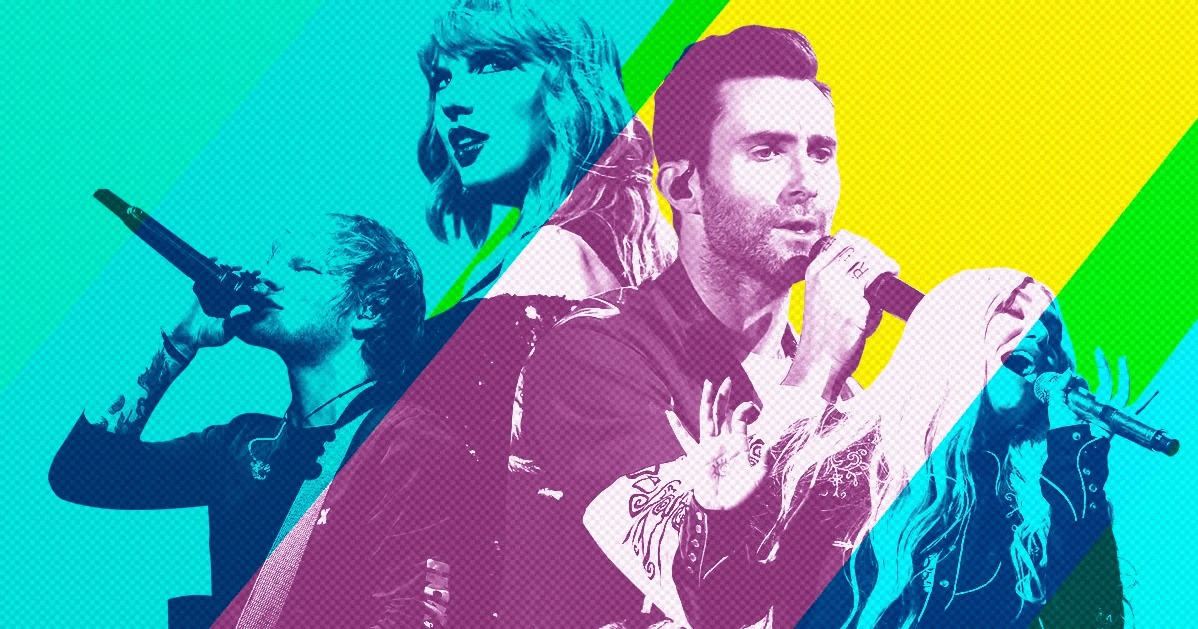
Throughout the 1980s, music was a massive unifying force for all. Whether you enjoyed artists like Prince, Madonna, and MJ, or bands like The Smiths, The Police, or The Cure, everybody appreciated them. Even only a decade ago in 2016, for example, mainstreamers like Justin Bieber, Rihanna, and Drake still felt connected to the mass audience.
Yes, music is a constantly evolving art, but over the recent years, mainstream music on the radio has felt lost in time, lost in a way that the mainstream aspect no longer feels connected to its mass audience.
Many music fans and critics believe that mainstream music has changed throughout the last decade. While artists would gain traction through radio plays, album sales, and long-term support from audiences, today’s music industry is increasingly shaped by social media algorithms, record label strategies, and the pursuit of viral success. Through interviews and survey responses from Ludlow High School students and staff, this article explores whether mainstream music really has become less creative, less meaningful, and less connected to listeners than it was in previous generations.
Looking into the responses, the majority feel that music has strayed further from its connectivity with its mass audience, and no longer captures the true, meaningful pieces of art that people strive for.
When asked about their own belief on the idea that mainstream music is worsening, English teacher Mr. Rea, who possesses a strong musical upbringing, states:
“I find that I’m ignorant about a lot of mainstream music these days because of how much I’m selecting artists to listen to on my own based on the recommendations of friends and/or subreddits devoted to indie rock, shoegaze, and punk rock.”
Student David Wilson, another survey respondent, agrees,
“Because capitalism has ruined the soul of modern music and has made many artists chase what can make them money rather than actual meaningful music.”
Cub Editor Lily Moore responded similarly,
“Mainstream music is getting worse because before you had people trying to be diverse with their music and make their own personal style, but now if an artist goes mainstream, almost everyone tries to replicate them. Then they get famous and over-saturate the style.”
Every response reflects the answer “yes.” The lack of originality and diversity, the focus on commercialism over meaning, and the listener disconnection provide evidence that mainstream artists are no longer connected as closely as they were in previous generations.
When the respondents were questioned about their satisfaction with the complexity and musicality of current mainstream music production, the average score was 4/10, and fifty percent of the respondents chose the record label influence as the reason for mainstream decline.
One term that has gained popularity online is “coworker music.” The phrase is often used to describe songs that are considered safe, predictable, and widely acceptable in public spaces such as retail stores, restaurants, and offices. While the term is usually used jokingly, critics argue that it reflects a larger concern about mainstream music becoming increasingly formulaic. Songs that fit this description often prioritize broad appeal and replayability over experimentation, making them more likely to succeed on streaming platforms and commercial radio. As a result, some listeners feel that mainstream music has become less distinctive and more focused on appealing to the widest possible audience.
This same idea appeared throughout the Ludlow High survey responses. Several participants cited a lack of originality, repetitive songwriting, and record label influence as reasons for their dissatisfaction with mainstream music. Their responses suggest that what many listeners call “coworker music” is not necessarily bad music, but again, music just designed to be universally acceptable rather than artistically unique.
Mainstream music is increasingly influenced by data and market trends. Record labels often analyze streaming numbers, listener behavior, and social media engagement to determine which artists and songs receive the most promotion. Many critics argue that this approach encourages artists to create music that appeals to algorithms and trends rather than taking creative risks.
Artists aren’t the ones ruining music; the labels are.
Lyrical depth in music had an average of three out of five in the survey, so the lyrics aren’t terrible, but the music is. It would be like reading a decent book that was copied wrong from a printer. The idea is there, just not fully through.

The genre that is affected mainly by the mainstream decline is rap. Rap has progressively gotten worse over the years, and TikTok is a factor in the decline. People online blow up artists who are not more than what they call just “untalented lards.” For example, an artist named 2Slimey doesn’t even make music. He was blown up online for how garbage his audio was; he produced straight “noise pollution.”
When asked to rate the different influences for artists nowadays, the majority voted that the most influential factor was for quick, viral success, followed by data-driven creations in music. Labels have constantly used these strategies as “lottery tickets,” making the next big artist blow up. After they blow up, they continue to pump out the same types of songs to try to stay at the top of the music charts.
Furthermore, fifty percent of the respondents say they listen to twenty to forty percent of non-mainstream artists daily, with the other half being as high as even eighty percent being a dedicated independent artist mix.
Industry research suggests that social media now plays a major role in music discovery. According to surveys conducted by TikTok and music industry analysts, many younger listeners discover new artists through short-form video content rather than traditional radio. At the same time, record labels increasingly use streaming data and audience analytics to identify artists with the greatest commercial potential, reflecting the growing influence of algorithms and data-driven decision-making in the music industry.
Despite concerns about mainstream music, respondents also recognized some positive effects of modern platforms such as TikTok. These platforms have given independent and underground artists new opportunities to reach audiences without relying entirely on major record labels. While survey participants generally believed mainstream music has become more formulaic and commercially driven, many also acknowledged that listeners now have greater access to diverse artists and genres than ever before. The debate over whether mainstream music is truly declining may continue, but one thing is clear: music fans are increasingly looking beyond the charts in search of originality and artistic expression.