

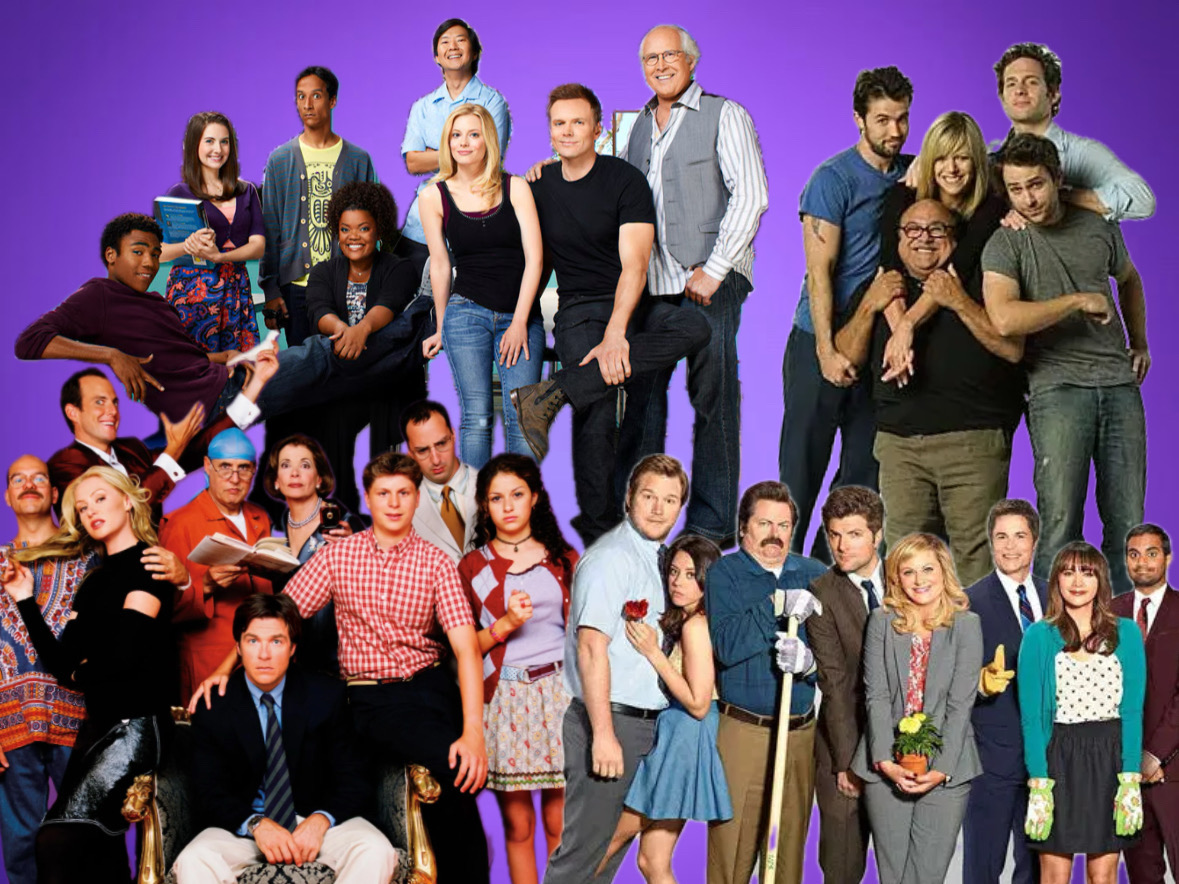
The sitcom. A genre of TV show that is so often dismissed as too simple, cast off as background noise to play while you’re doing homework or your mom is folding laundry. A term we toss around and say with a sigh, as though we’re already bored before our lips even form the word—sit-com.
The name is pretty self-explanatory. A situation comedy is a comedy where the characters find themselves in a different situation each episode. But sitcoms have evolved into so much more than their simplistic name may suggest. They are the perfect type of show. Complex, yet stupidly funny. Exciting, yet comforting. They are so multifaceted and so much more than they’re made out to be.
There are four pillars, four characteristics, that make a great sitcom great: Absurdity, Irony, Complexity, and Familiarity. These are the traits that draw the audience into the show and allow them to connect to it. No sitcom can do all of these things perfectly, but when a show finds the right balance, it becomes unstoppable.
Community is the poster child for the absurd sitcom. First on the air in 2009, Community is a show about a group of unique students who become unlikely friends in a Spanish study group at community college.
“The study group,” as they call themselves, consists of seven interesting personalities. Jeff Winger: a smooth-talking former lawyer going back to college to get a real degree after faking his old one. Britta Perry: a twenty-something hippie/activist who somehow manages to do everything wrong. Abed Nadir: an eccentric TV/film nerd who has trouble reading social cues. Troy Barnes: a former high school jock who’s secretly a softie. Annie Edison: a goody-two-shoes and former adderall addict. Shirley Bennet: a single mom and devout Christian. Peirce Hawthorne: an old, rich, out-of-touch heir to a moist towelette empire—Hawthorne Wipes.
The characters are already an absurd collection of people, but the show’s storylines are even more outlandish. School-sanctioned paintball tournaments, a rapping dean dressed as a candy bar, mob-style fried chicken smuggling schemes, secret air conditioning repair cults, alternate timelines created by the toss of a dice, and students falling in love with the human incarnation of Subway are all just parts of a normal Tuesday at Greendale Community College.
 A touch of absurdity, no matter how small, is essential for a good sitcom. Outlandishness is what makes a sitcom an escape from reality. The audience can suspend their logical instincts and instead get lost in the show’s unbelievable scenarios and the ridiculous ways that the characters respond to them.
It’s Always Sunny in Philadelphia is unique in the fact that almost the whole show is ironic. First starting in 2005, it’s a satire chronicling the antics of a group of frankly, terrible people. “The Gang”, as they are dubbed in the show, is a group of friends who make selfish, uneducated decisions with no regard for the wellbeing of anyone else but themselves.
There’s nothing redeeming about the characters, there’s no sappy ending that culminates in some moral lesson. The characters’ selfishness seems to cause everything to go wrong, and everyone’s in on it except for them. That’s what makes the show so good, because the characters are made to be criticized and laughed at.
When asked about why she enjoyed the show, Arianna Podmore said, “The people in Always Sunny are terrible, but they’re so terrible that you have to love it. It’s like watching a garbage can on fire.”
Irony is important in a sitcom because, at the end of the day, someone needs to be the butt of the joke. When the audience sees the characters acting completely stupid, they can predict the consequences, which makes the characters’ ultimate failure all the more satisfying, and all the more hilarious. It all comes down to the fact that in comedy, you need something—or somebody—stupid to laugh at.
Arrested Development may be a show based around dysfunctional characters and nonsensical humor, but it is also very complex. Starting in 2003, the show follows the antics of a wealthy family after they lose all their money when the patriarch—George Senior—goes to jail for fraudulent business activity.
The show presents its story and its jokes in a way that doesn’t dumb anything down for the viewer. There are so many running gags throughout the series, and the family’s antics always work toward a point where they overlap each other and cause even more chaos. Jokes are so rapid-fire that many of them often get brushed under the rug. The show features a narrator who is present for everything, giving context and filling in details that the audience might have missed or forgotten about. It’s a show built for rewinding, because there’s so much packed into an episode, and you don’t want to miss any of it.
When asked about what sets Arrested Development apart from other shows, Isabella Seara said, “Arrested Development has a feel that’s so unscripted and so funny, like when people randomly call back to the past. … Every episode is just so different, and that’s what makes it hilarious.”

Complexity in a show is the thing that keeps people coming back for more. There’s a reason why we stop watching kids’ shows once we turn ten. They become uninteresting. When a show’s storylines and jokes have layers, the show becomes more interactive. The audience isn’t always handed a joke, they have to think about it for a while before it lands. The right amount of complexity makes a show funnier and more engaging, which makes people want to see more, or even rewatch the whole show to catch things they may have missed on the first watch.
Perhaps the most important trait of a sitcom is familiarity. Parks and Recreation is a show that does this exceptionally well. First airing in 2009, Parks and Recreation is a workplace comedy that follows the daily life of Parks Department workers in Pawnee, Indiana.
Parks and Rec is an interesting choice to exemplify familiarity, because I only started watching it about a week ago: I’m barely familiar with it myself. However, I already feel so connected to the characters and their personalities. I know that Leslie Knope is a painfully optimistic, incredibly thoughtful person who would do anything to benefit her town. I know that Ron Swanson is a stoic libertarian who values hard work, and ironically, hates government despite holding a government job. I know April Ludgate is deadpan and sarcastic on the outside but secretly caring. And, I know that Andy Dwyer and Tom Haverford are both loveable goofballs in their own ways (incompetent and overly confident, respectively). Parks and Rec is one of the most wholesome shows I’ve watched, because all the characters truly love and care for each other at the end of the day.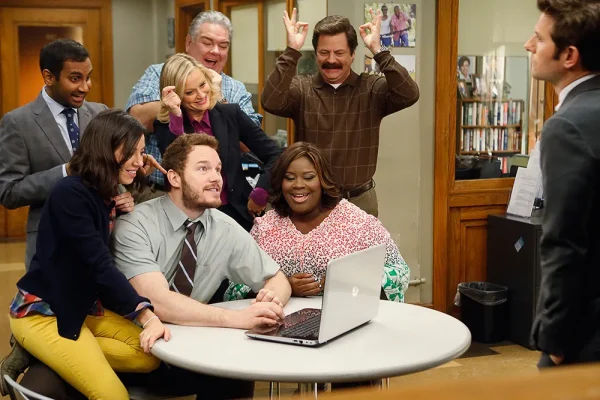
A show can be outlandish and irreverent and off-the-wall, but if it isn’t somehow grounded in reality and familiarity, it will never stay with the viewer. They need something to grab onto, a core of relatability in the show’s characters that makes them see a bit of their real lives reflected in the fantasy ones they see on TV. That’s how they can truly connect: knowing that there’s a real heart under all the made-up stuff that they love.
The thing that ties all of these shows together is the fact that they are completely character-driven and heavily focused on worldbuilding. That’s the beauty of a sitcom. No matter what the situation is, the characters are constant. They each have their own quirks. You become familiar with how they react to things and what their dynamics are like when paired with other characters. Unique, well-developed characters are the foundation that make a sitcom what it is. You can have an amazing recipe, but if the ingredients aren’t high-quality, your meal will never taste as good as it has the potential to.
When interviewed about the quality of sitcoms today, Lily Moore highlighted the importance of character-driven shows that don’t rely too much on media references. “It’s really important, worldbuilding. The characters themselves have to be the joke.”
While sitcoms may not be as high-stakes or intense as the drama and action found in the shows on today’s streaming services, they do possess a certain charm. The beauty of the sitcom lies in the fact that its stakes aren’t too high. It’s a genre of show built around comfort, familiarity, and most of all—laughter.
In a world where everything seems to make you hold your breath, the sitcom is a sigh of relief.